
Why Your Body Is Changing in Perimenopause (And What to Do About Weight Gain)
Updated: Sep 17
Why Perimenopause Weight Gain Feels So Confusing
If you’ve found yourself looking in the mirror and thinking,“Nothing I’m doing is working anymore…”
You’re not imagining it.
Perimenopause weight gain can feel like it comes out of nowhere.The habits that used to work suddenly don’t.Your body feels different. Softer. More reactive. More tired.
And for so many women, this is the moment they start questioning themselves.
But this isn’t about a lack of discipline.And it’s not just “getting older.”
Your body is shifting. And it’s asking for a different kind of support.

What’s Actually Happening in Your Body
During perimenopause, your hormones don’t just decline.They fluctuate.
Estrogen and progesterone begin to change in a way that impacts:
how your body stores fat
how sensitive you are to insulin
how your body handles stress
how well you sleep and recover
And all of that directly affects your metabolism.
This is why you might notice:
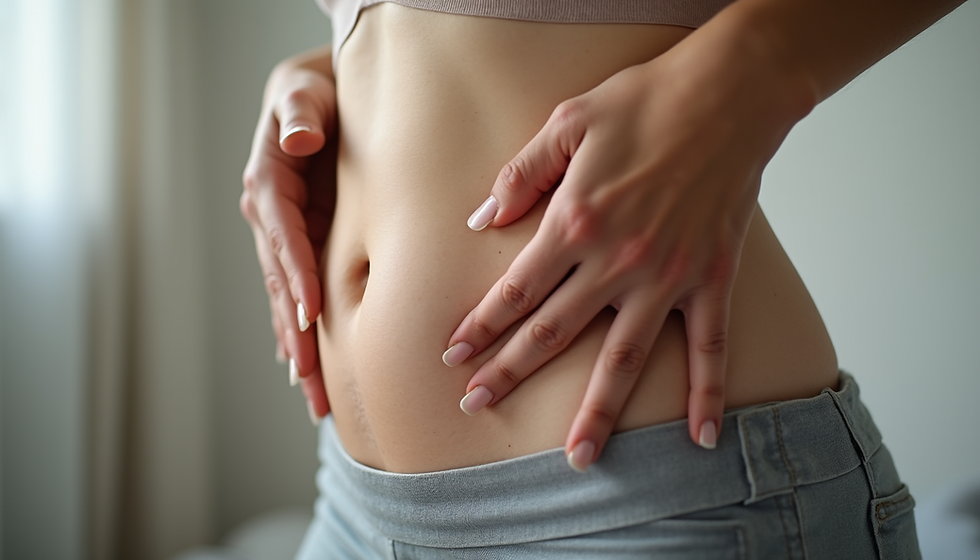
weight gathering around your midsection
increased cravings or blood sugar swings
feeling tired even when you’re trying to do all the “right” things
Your body isn’t working against you.It’s responding to a new internal environment.
Why What Used to Work Isn’t Working Anymore
This is where so many women get stuck.
You try to:
eat less
exercise more
push harder
But in this phase of life, that approach can actually make things worse.
When your body is already under stress, adding more restriction or intensity can:
increase cortisol (your stress hormone)
disrupt blood sugar even more
make your body hold on tighter to weight
Your body isn’t being stubborn.It’s being protective.
What Your Body Is Actually Asking For
This is where things begin to shift.
Instead of trying to control your body, we start to support it.
Real healing here looks like:
1. Eating in a way that stabilizes your blood sugarBalanced meals with protein, fiber, and whole foods help your body feel safe and steady again.
2. Supporting your metabolism, not restricting itYour body needs nourishment to function well, not deprivation.
3. Moving your body in a way that builds strengthStrength training, walking, and supportive movement become more important than high-intensity burnout.
4. Regulating your nervous systemStress plays a much bigger role than most women realize.Your body needs moments of calm to reset.
5. Looking deeper when neededThis is where labs, metabolic health, and personalized support matter.Because your body is unique.
This Isn’t the End of Feeling Like Yourself
It can feel like your body is changing in ways you don’t recognize.
But this isn’t the end.It’s a transition.
And when you understand what’s actually happening, everything starts to make more sense.
You stop fighting your body.And you start working with it.
You are not broken.Your body is shifting, and it’s asking to be supported in a new way.
If You’re Ready for Real Support
This is exactly the work I do inside The CALM Method.
We look at your body as a whole:your metabolism, your hormones, your nervous system, your lifestyle
And we create a plan that actually fits you.
Because real healing doesn’t come from doing more.
It comes from doing what your body actually needs.
If this resonated with you and you are ready to stop guessing and start getting real answers about your hormones, your gut, and your whole body health, I would love to connect. Book a free discovery call and let's talk about what personalized holistic support looks like for you.
Betsy Black is a Certified Metabolic Balance Coach, Holistic Wellness Coach, Yoga and Pilates instructor, Master Reiki practitioner, meditation and breath work guide, and functional nutrition educator with over 20 years of experience. She specializes in hormone health, thyroid support, and whole body wellness for women navigating perimenopause and menopause. The information in this blog is for educational purposes only and is not intended as medical advice. Always work with a qualified healthcare provider for personalized care.


Comments